Volleyball is one of the sports in Kenya that is experiencing steady growth, supported by a vibrant school system, active community teams, and professional clubs that all work together to develop players from every part of the country. The sport demands a combination of a technical, physical, and mental skillset to achieve a competitive level. This article examines the volleyball skills, the methods of learning, and the ways Kenyans can develop these skills, as a result of deliberate practice, effective coaching, and involvement in competition, and describes the volleyball skills. Begin your 1win registration today and discover the skills in Volleyball in Kenya!
Fundamentals of Volleyball Skills
All sports have fundamental skills, and these core skills are the ones that every sport, volleyball included, relies on to develop more advanced skills. Knowledge and understanding of these basics give a player confidence and consistency, which is crucial in determining success in the game, whether they are playing for fun or learning in the comprehensive volleyball system in Kenya.
Importance of Mastering Basic Techniques
It is of utmost importance to learn first the fundamental techniques of the game for there is great importance to the fact that the game of volleyball relies on coordinated and structured movements for there to be ascertain flow of play. Different skills e.g. serving, attacking, setting and passing determine the flow of play in a rhythm and teams that do them repetitively and make fewer mistakes do play at an optimum level.
In Kenya, coaches try to emphasize the importance of repetition and doing them in a certain way in proper form, but especially for the young players, as they try to assemble and develop a strategy in the game. A player that knows how to do proper body posturing, hand positioning, and correct footwork at all times, will be able to adapt to the scenario in a match and counter the movements of the other players and collectively be better as a team.
Physical and Mental Preparation
In volleyball, the physical aspect and mental aspect of players have a strong influence on the level of performance exhibited. The players need to be strong, have endurance and be agile to able to jump, defend and quickly move across the court. In Kenya, volleyball players try to do conditioning routines to improve the physical performance level of players so that the players can be able to perform at an optimum level. Mentally, players need to have a certain level of concentration, quick decision making and be able to perform with a level of confidence that is appropriate to the situation that they are in, especially in situations that deal with a lot of pressure. Mental preparation is especially important in situations that deal with long rallies and in tight scores, as high level composure in these situations is key. During competition, players can stay focused by practicing visualization, positive communication and discipline.
Equipment and Court Awareness
Knowing how to wear and use knee pads, proper footwear, and comfortable sportswear to help mobility and reduce chances of injuries is important in court and equipment awareness too. Kneepads, sportswear, and proper footwear help reduce injuries and increase mobility. Court awareness is knowing where one’s, and where the ball is, and where one’s teammates and opponents are. Players are taught in Kenyan coaching programs to maintain awareness through constant scanning, communication, and correct positioning for defense or attack as well as defense. Realizing the lines, the lines of attack, and the system of rotation gives players rule history while maximizing court coverage, and state of readiness.
6 Basic Volleyball Skills Every Player Must Know
Every single player regardless of whether they are a beginner, intermediate, or a professional, in the sport of volleyball, has to master and acquire six major skills that are the foundation of the sport. Each of these skills is very important for the enhancement of overall performance, and these skills are the reason why teams are able to compete in the local and international tournaments for the sport of volleyball that is the reason these skills are the reason why teams in Kenya are able to compete in the international as well as local tournaments for the sport of volleyball.
Serving
Serving is essential for starting every rally and is also a determined tactical move in a player's skill set. They can use underhanded serving, overhanded, float, and jump serving depending on their training level. In Kenya, training tends to focus on consistent overhanded serves as it is a means to get precise control and power. Solid serving pressures opponents, breaks their formation, and allows for an easier opportunity to score points as some serves get points on their own. To serve better, players practice their toss accuracy, follow-through and body positioning to ensure a clean and confident hit on the ball.
Passing
Passing, known as bumping in some circles, is also key to receiving a serve and redirecting the ball after an attack from the other side. With a controlled attack, the whole team can set up in a quick transition to score. Kenyan players are taught to use the forearm platform technique and to work on their stance, body movements and feet to ensure accurate positioning. Effective passing improves the organizational structure of the team and minimizes the risk of an error, making it easier for the setter to get the ball out. To prepare for different game situations, players shooting and passing from varying positions and angles on the court to improve their control.
Setting
Setting is when the ball is distributed to the seasoned attackers to spike. A setter in volleyball must be accurate, on time, and must deliver the ball even in the most pressured times in a game. In the setter training in Kenya, they are taught to have soft hands, kick and is able to move his or her feet decision making is to be executed. A setter must know how to read the opponents defense and then picking the best attacker to spike the ball and ensure the setter keeps her control of the game as it goes to and from. The players develop trust to the setter when she keeps on making precise and accurate sets. This enables the players to have a more sophisticated ops offensive techniques like a quick attack and combination plays.
Attacking/Spiking
Where point scoring is concerned, spiking is the main necessity of any volleyball game. This spike has to have a strong jump, proper arm motion and timing to ensure the ball is contacted with the right part of the arm. In most sporting schools and clubs, the spike is one of the most recognized skills. The players then minimum coordinate the jump and the aggression of the arm to ensure he or she goes to the max of their potential. As the training undergone is more, the attackers are able to be more precise on how to hit the ball and even to bank shot it.
Digging
Even with powerful spikes, players can still keep the ball in motion and prevent the other team from scoring by digging. Digging is another one of the vital defensive skills where players need to have a low body positioning, quick reflexes, and have their hands ready to stop the ball. The Kenya defensive players train a lot on the defense of the court so they can prevent the other team from scoring by maintaining a strong defense. The team can also prevent the other team from scoring by transitioning their focus to attacking. Having an improved consistency of digging can also improve the defense of the entire team on the court.
Blocking
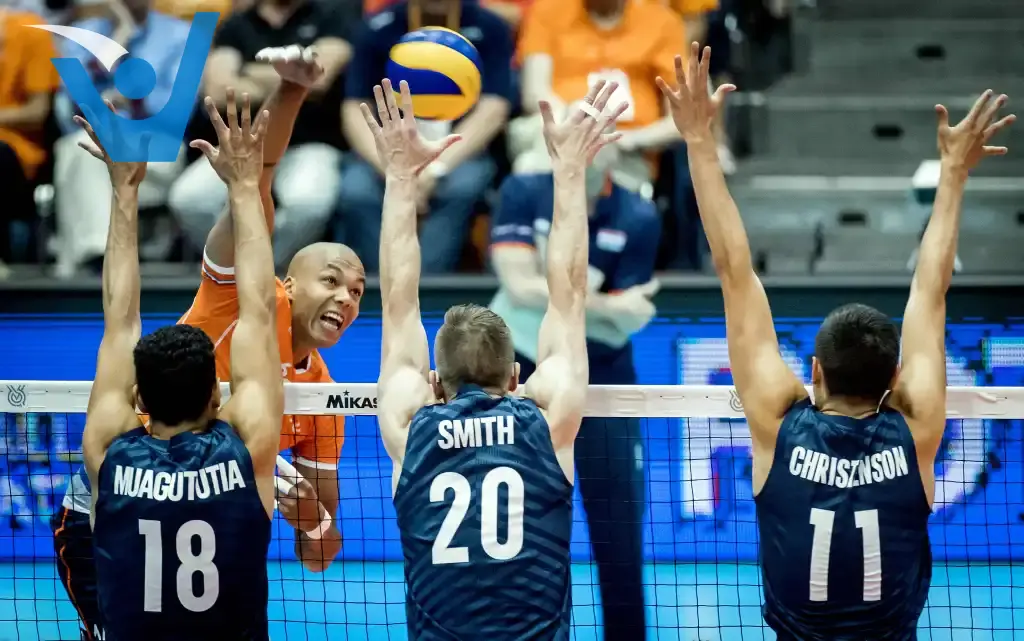
Blocking is one of many defensive skills where players stop or slow the attack of the other team. In order to perform this skill, players need to have the precise timing, positioning, and the ability to jump vertically to the appropriate level. Coaches from Kenya train players to look for tells from the opposing attacker and to work with coordination with their teammates. Having a robust block can potentially shift the momentum in favor of the team by lowering the other team chance of scoring and forcing the attack to make errors. Blocking also gives players the chance to improve their reaction time and the strength in their upper body.
Essential Skills for a Successful Volleyball Player in Kenya
There are some other qualities we need to support high performance in addition to the six core skills. These attributes are useful to athletes in adjusting to different playing conditions in Kenya and contribute to the overall success of the team.
Agility and fitness
The core of volleyball performance is agility and fitness. This sport entails a lot of quick direction shifts, explosive jumping, and continuous movement during the sets. Agility ladder drills, plyometric exercises, and clock sprints are the exercises that Ms. Posie uses during her high performance to ensure that the volleyball players in Kenya are able to adjust and maintain a high-performance level.
These exercises help in speeding up coordination and reaction which in turn ensures that the players maintain a high intensity performance during a long match. There is also a component of endurance in fitness which helps the players maintain activity and accuracy during long rallies. It is important to condition the body to help reduce high levels of fatigue and also to prevent injuries.
Teamwork and communication
Ninety percent of volleyball involves talking and coordinating as a unit. Communication happens on the court as each player gets feedback on how their actions impact their partners, plus the unit as a whole. Players must perform multiple, coordinated roles without miscommunication.
Kenyan teams demonstrate advanced verbal and bodily communication when executing plays and guiding teammates through formation shifts. Cohesive collaboration enables efficient partnered actions required by each player to perform during servers, attacks, and defense. Devastatingly effective teams demonstrate efficient communication and decision-making to coordinate structured actions during high-pressure situations.
Focus and mental toughness
Volleyball is a game of mental discipline. The game requires instant decisions, and it is a sport of changing momentum. Focus is a component of mental toughness, and it is required to maintain consistent execution of high quality. In the Kenyan system, mental toughness and focus are taught simultaneously, and techniques such as structured breathing, positive self-talk, and simulation of high-pressure situations are utilized. Effective discipline allows players to perform at their best during various competitions, such as school volleyball tournaments, community competitions, and even advanced leagues.
How to Play Volleyball in Kenya
The first step to playing volleyball in Kenya is to comprehend the volleyball rules. Fortunately, there is a lot of training in the country, especially in the school, college, and club systems to help beginner and even more advanced players hone their skills.
Rules and scoring
All volleyball competitions in the world follow the same rules, including Kenya. A volleyball match is a contest between two teams, each consisting of six players. The aim is to hit the volleyball over the top of a net and land the ball in the other team\u2019s court. Matches are played in sets, and each set is played to 25 points, but a team must win a set by two clear points. There are rules governing how players can participate in the points such as order of rotation and rules governing attack. Kenyan volleyball leagues conform to these world rules which is a good thing as it helps players develop their skills in a way that can be used in other countries.
Local leagues and clubs
In the volleyball activity community in Kenya with the help leagues in the school and established clubs. Teams and Institutions in Kenya Pipeline, KCB and others in the counties have added to the two high level talent. Young Athletes have the opportunity to join school teams, community clubs, or college leagues in order to gain more experience and more exposure. They get the chance to get coached in a structured manner and get to play more games. This also leads the to the chance of the players going to higher level of the volleyball activity at the national level. The players get the chance to train more as there are organized leagues. The players get motivated to train more and also to better themselves at their skills and get them to improve themselves.
Tips for beginners and advanced players
Tailored training methods are an advantage to players of all levels, and this is also the case for players in Kenya. Players in the beginner levels should be focusing more on their techniques on they are going to be learning like passing and also serving and the footwork. This is going to help them in the long run in training as well as the coaching in order to get better. They are going to gain confidence and help improve their form.
On the other hand, players in the advanced levels should be more focused on the tactical of the game the awareness during the game. They should also consider the things like the position they want to play in like the setter position or the libero position or even the middle blocker set up. Players are going to improve positively with things like film analysis, more advanced drills. But at the end of the day the players should be consistent and be disciplined. The improvement from the players is going to be noticed. It does not matter the talent level the players are going to get better and train more.